
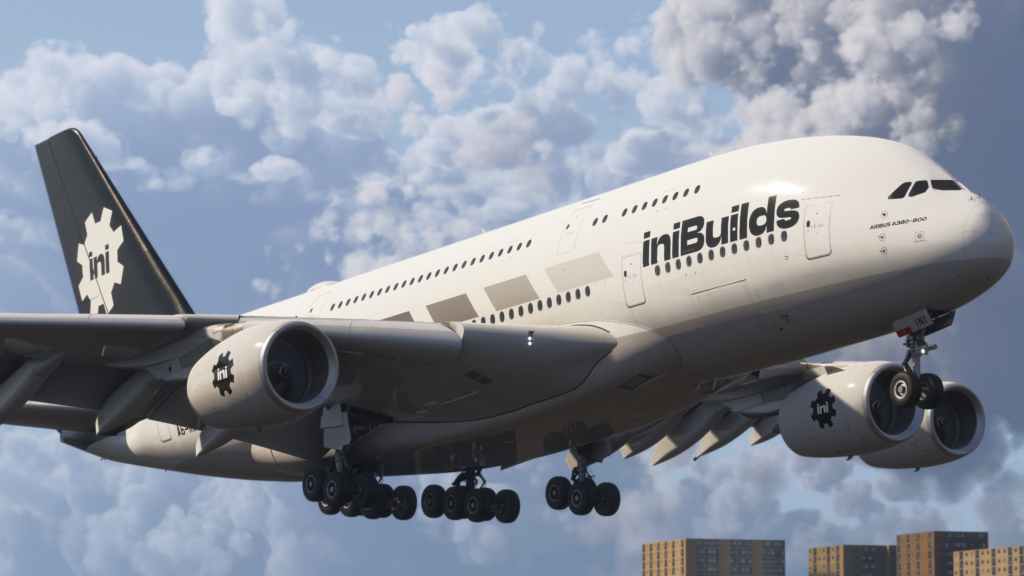
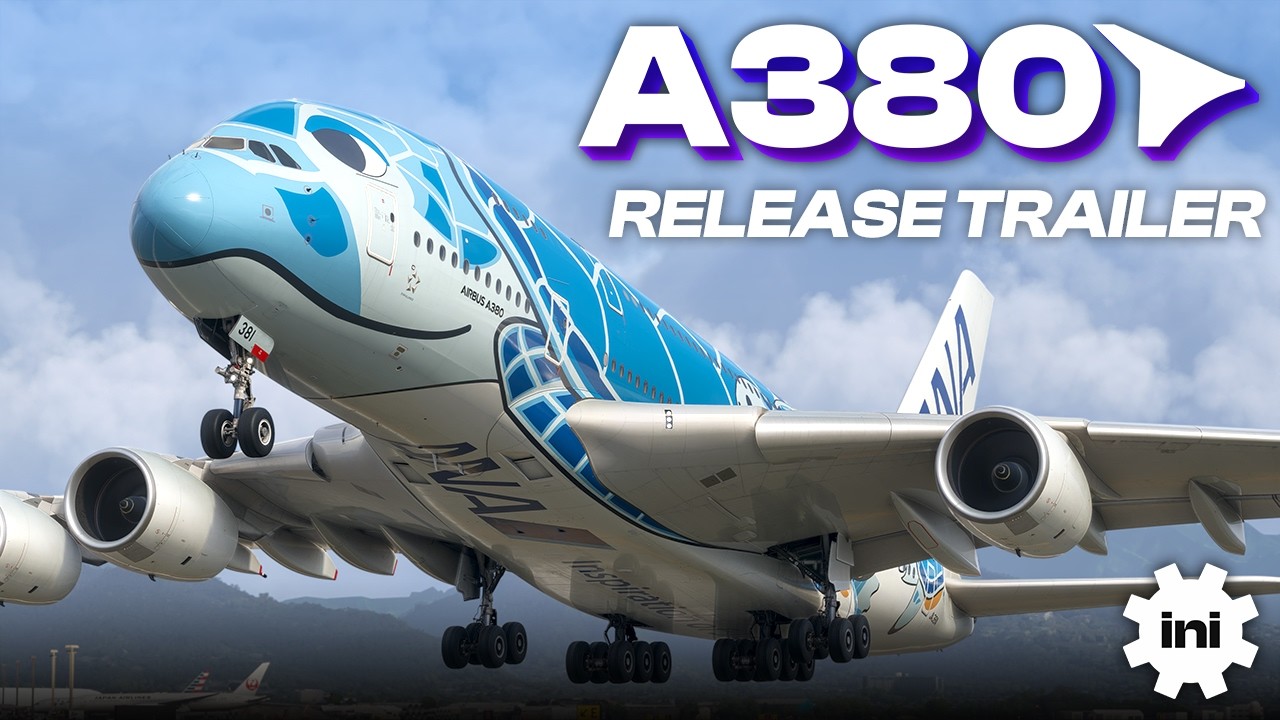
The A380’s technological advancements and sheer scale place it in a league of its own in aviation history.
The World’s Only “Superjumbo” Passenger Airliner
The A380 is a four-engine, wide-body, long-range airliner produced by European aviation company Airbus. It is the world’s first (and to date only) “superjumbo” airliner. The A380 holds several world records for production airliners, notably for its size, including largest passenger capacity. The prototype of the A380 took its maiden flight in 2005 and production models entered service in 2007. Approximately ten major airlines operate the A380 throughout the world today.
One of Aviation’s Most Ambitious Initiatives
In the late 1980s, engineers at Airbus sought to introduce a new paradigm in aviation, a wonder craft that would surpass the industry-leading Boeing 747 and dramatically improve the passenger aircraft experience. The company sought three main goals with the A380: carry significantly more passengers than the 747, have a greater range than the 747, and operate substantially more efficiently than the 747 on a per-passenger basis. In developing such a novel airliner, Airbus aspired to establish a significantly higher standard in aircraft technology, dramatically improve the passenger experience, and reduce airport congestion. Airbus felt that the A380, which would carry roughly 500 passengers per flight, would bolster the hub-and-spoke airport model by funneling large numbers of passengers through primary international hubs.
Accelerating Technology
Airbus developed a design with a full-length double-deck fuselage, large staircases to connect the two levels, and a twin-aisle layout for each deck. Engineers designed the aircraft to accommodate up to 853 passengers, with typical configurations seating between 500 and 550. The company’s aerodynamicists created a large-area wing to maximize lift and minimize wing loading for efficiency and extended aircraft longevity. They created a supercritical airfoil shaped to dampen drag-inducing shock wave formation near the speed of sound to optimize the A380’s cruising efficiency. They further developed wingtip fences to inhibit drag-inducing vortex formation.
The massive size of the aircraft required Airbus to innovate novel materials, material handling techniques, and cutting-edge avionics and flight controls. Engineers pioneered GLARE, or glass-reinforced aluminum, for the upper fuselage to increase resistance to operational fatigue and reduce weight. Airbus created a state-of-the-art flight deck with an all-glass cockpit, a full suite of pilot situational awareness systems, and side-stick control. Flight controls use digital fly-by-wire links and high-pressure hydraulic actuation mechanisms. The enormous size and weight of the A380 required new engine technologies. Rolls-Royce created the Trent 900 and Engine Alliance (General Electric Aerospace and Pratt & Whitney) developed the GP7200, both high-bypass turbofan engines.
Soaring Into History
The A380 took its maiden flight on April 27, 2005, and entered service on October 25, 2007. Airbus developed one production variant, the A380-800, with two subvariants based on engines: the A380-841/842, which uses the Rolls-Royce Trent 900, and the A380-861, powered by the Engine Alliance GP7200. The company manufactured a total of 254 A380-800 airframes during a production run that spanned from 2003 to 2021.
Used for long-haul routes throughout the globe, the A380 resides in a class of its own due to its technological advancements, efficiency, and sheer size. It has set several world records, including heaviest passenger airliner and highest maximum seating capacity of a passenger airliner. With total development costs exceeding 30 billion dollars, the A380 is also the most expensive passenger airliner ever created.
Extraordinary detail and realism by inibuilds for microsoft flight simulator aviators
The A380 measures 238 feet, 7 inches in length, has a wingspan of 261 feet, 8 inches, and is 79 feet high. It is powered by four high-bypass turbofan engines, either the Rolls-Royce Trent 900 or the Engine Alliance GP7200, each of which generates up to approximately 75,000 pounds of thrust. Carrying up to 85,000 gallons of fuel, the A380-800 has a range of 9,200 miles. It has a certified maximum take-off weight of 1.268 million pounds (575 metric tons). It has a cruising speed of Mach 0.85, or 561 miles per hour, a climb rate of up to 2,500 feet per minute, and a service ceiling of 43,000 feet above sea level.
Long-time Microsoft Flight Simulator partner iniBuilds has recreated the Airbus A380 in extraordinary detail for an incomparably realistic flight simulator experience. This phenomenal addition is a member of Microsoft Flight Simulator’s “Exclusive Series,” and is available for the first three months of the product’s lifetime only in the Microsoft Flight Simulator Marketplace. Purchase today for $74.49 USD. The sky is calling!
Highlights of the iniBuilds Airbus A380 include:
- Two Liveries include iniBuilds’s house livery and clean white livery at launch, with more to come at a future date.
- Highly detailed A380 exterior and interior modelling, built specifically to showcase the scale and complexity of the world’s largest passenger airliner.
- Full flight deck modelling with extensive interactive controls, displays and aircraft systems.
- Deep avionics simulation, including detailed flight management, navigation, auto flight and aircraft monitoring systems.
- Two distinct engine variants: Rolls-Royce Trent 900 and Engine Alliance GP7200, with appropriate performance and characteristics.
- Bespoke A380 flight model designed around the aircraft’s enormous mass, inertia and unique handling characteristics.
- Detailed electrical, hydraulic, pneumatic, fuel and flight-control system simulation, with interconnected dynamic system behavior.
- Advanced fuel simulation, including realistic fuel transfer, tank management and refueling functionality.
- Functional RAT (Ram Air Turbine) and associated aircraft behavior.
- Detailed maintenance functionality, allowing the aircraft’s condition and servicing requirements to form part of the flight simulator experience.
- Potable water and waste simulation, including consumption and servicing throughout the aircraft.
- Functional onboard showers, including water usage and visible steam effects.
- Extensive failure simulation, allowing numerous aircraft systems and components to fail with realistic cascading effects.
- GPS jamming / degraded navigation simulation, adding another layer of abnormal / adverse operations.
- Aircraft icing simulation and associated system behavior.
- CPDLC (Controller-Pilot Data Link Communications) and ACARS (Aircraft Communications Addressing and Reporting System) functionality for datalink-style operations.
- Functional cockpit printer, integrated with aircraft operations.
- Interactive cabin features, extending the simulation beyond the flight deck.
- Detailed audio package, capturing the distinctive character of the A380 across the cockpit, cabin, exterior, and both engine types.
- Extensive animation and visual-detail renditions, including wipers, doors, flight controls, landing gear, and other aircraft mechanisms.
- Designed as an aircraft that users can explore as well as fly, with meticulously recreated detail throughout the cockpit and aircraft as a whole.
- Developed specifically for Microsoft Flight Simulator 2024, taking advantage of the latest simulator platform.
For technical support and documentation for the Airbus A380, including the latest manuals, please visit:
iniBuilds home page: https://inibuilds.com
Microsoft Flight Simulator is available for Xbox Series X|S, Game Pass, PC, PlayStation 5, PS VR2, Steam, and supported mobile phones, tablets, and lower-spec PCs via Xbox Cloud Gaming. For the latest information on Microsoft Flight Simulator, stay tuned to @MSFSOfficial on X (formerly Twitter) or visit flightsimulator.com.